gstack: A Persistent-Browser Daemon as an Engineering Team
A deep-dive into the architecture of gstack, examining its persistent Chromium daemon, Bun single-binary distribution, and role-based multi-agent orchestration for AI coding workflows.
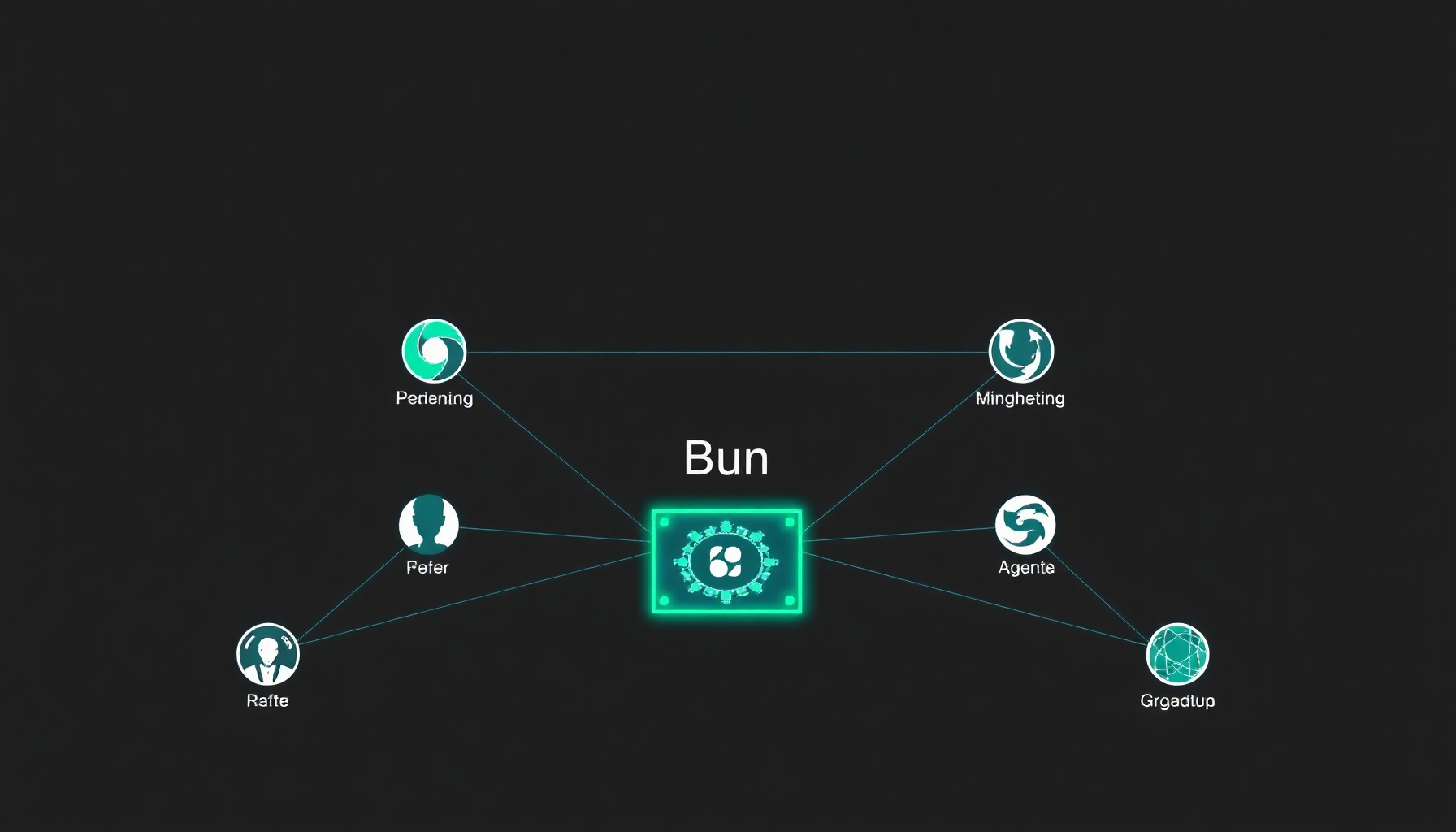
The conversation around AI-assisted coding has largely settled on two poles: sophisticated model APIs and the “prompt pack” toolkits that wrap them. gstack, the open-source project from Y Combinator CEO Garry Tan (GitHub), resists this dichotomy. With over 127,000 stars, it presents not a new framework or API, but a runtime architecture for transforming a single LLM coding agent into an orchestrated team.
This isn’t a prompt library. It’s a persistent state machine with a browser daemon, designed to solve three concrete engineering problems simultaneously: sub-second browser automation for agents, cross-session persistent memory, and structured multi-role orchestration—all within a single ~58MB executable. For the engineer building production AI systems, gstack’s architecture offers a compelling case study in opinionated, systems-level design for agent harnesses. This analysis is based on the repository source, documentation, and issue tracker — we did not run it hands-on.
Daemon Architecture & Browser Latency
The core architectural innovation is the persistent headless Chromium daemon. Instead of spawning and tearing down a browser context per agent command—a process plagued by multi-second latency—gstack maintains a long-lived, headless Chromium process bound exclusively to 127.0.0.1. The CLI communicates with this daemon via local HTTP, creating a stateful “browser as a service” within the local machine.
The lifecycle is carefully managed. On first invocation, the cold start of the Chromium process takes approximately three seconds. Subsequent commands, however, execute in 100–200ms by leveraging persistent CDP (Chrome DevTools Protocol) tabs and cookies. State is serialized to .gstack/browse.json using an atomic write pattern (write to a temporary file, then rename) with mode 0600 for security. The daemon selects a random port between 10,000 and 60,000 on startup, with a retry mechanism.
Based on the repository’s ARCHITECTURE.md, the daemon includes a health-check and respawn loop. If the browser process becomes unresponsive, the CLI can restart it transparently. Crucially, an idle shutdown timer (30 minutes) prevents resource leaks on long-forgotten sessions. This design reflects a clear tradeoff: the overhead of managing a persistent daemon in exchange for the latency and state benefits critical for interactive agent workflows.
// Shape of .gstack/browse.json (documented in ARCHITECTURE.md)
{
  "pid": 12345,
  "port": 34567,
  "token": "uuid-v4",
  "startedAt": "2026-08-13T10:00:00Z",
  "binaryVersion": "abc123"
}
Build & Distribution: The Bun Single Binary
Distribution complexity is a silent killer of adoption. gstack solves this by compiling the entire TypeScript codebase into a single ~58MB binary using Bun’s compile feature (ARCHITECTURE.md). This eliminates runtime dependencies like node_modules. The choice of Bun is deliberate: it provides native TypeScript execution, an integrated SQLite driver for decrypting Chromium cookies on disk, and a high-performance HTTP server (Bun.serve) for the daemon’s ~10 routes.
The build incorporates a version-aware process lifecycle. The git revision (git rev-parse HEAD) is baked into the binary at compile time and written to dist/.version. On startup, the CLI compares this baked version against the version of any running daemon process. If there’s a mismatch, the CLI kills the stale server and launches a new one matching its own version. This ensures that updating the CLI binary is seamlessly synchronized with its underlying daemon process, preventing subtle state corruption from version skew.
Windows support reveals a pragmatic engineering compromise. A known bug in Bun’s pipe handling for Playwright (oven-sh/bun#4253) prevents the daemon from using Playwright directly. The fallback: the browse server itself falls back to a Node.js runtime. Furthermore, on MSYS2 (common on Git for Windows), the build process uses file copies instead of symlinks to ensure portability across different shell environments.
Multi-Role Slash-Command Harness
The toolset’s power lies in its mapping of 23 slash commands to distinct organizational roles. Commands like /plan-ceo-review, /plan-eng-review, /qa, /ship, /review, and /retro are not just different prompts; they represent different facets of a software development lifecycle, orchestrated through the agent.
Critically, this is not implemented as a code framework. Each command is a pure Markdown “skill” file that composes prompts for the underlying LLM. This is a key architectural decision: roles are prompt compositions, not programmable objects. This keeps the system flexible and model-agnostic. According to the README, it functions across ten different AI coding agents, including Claude Code, Codex, Cursor, and Gemini CLI. Integration with OpenClaw happens via the ACP (Agent Communication Protocol), and native ClawHub skills are available for specific tools like the /office-hours or /cso commands.
The harness doesn’t reinvent orchestration; it structures it. An engineer can invoke /autoplan to have the agent act as a project manager, breaking down a task, then switch to /review to have it critique the generated code from the perspective of a senior engineer. The persistent daemon state means context (like an open browser tab for documentation) carries across these role invocations within a session.
Security & Tunnel Architecture
Security is woven into the architectural fabric, not bolted on. The daemon’s exclusive binding to localhost (127.0.0.1) is the first line of defense. For collaborative “pair-agent” mode using tunnels like ngrok, gstack implements a dual-listener architecture (introduced in v1.6.0.0). The public tunnel listener and the internal daemon listener are isolated, with explicit protections against origin spoofing and token leaks (ARCHITECTURE.md).
Before any memory is synced to the gbrain git repository, a secret scanner is invoked. It blocks AWS keys, access tokens, PEM certificates, and JWTs. The telemetry system, built on Supabase, is opt-in and off by default. The schema is defined in supabase/migrations/, and Row-Level Security (RLS) policies deny all direct access, as outlined in the README’s privacy section. For team use, the ./setup --team command configures auto-updates to shared repositories with a once-per-hour throttle and is designed to be network-failure-safe.
gbrain: Cross-Machine Persistent Memory
gbrain is the system’s long-term memory, implemented as an opt-in sync of learnings, plans, and retrospectives to a private git repository. This addresses the fundamental problem of agent state being ephemeral across sessions. The implementation includes a privacy allowlist, giving users fine-grained control over what is synced.
In team mode, the memory becomes a shared context. The synchronization process is engineered for resilience and efficiency: updates are throttled to once per hour and are designed to fail gracefully without disrupting the user’s local work. This transforms the agent from a stateless tool into a system with accumulating institutional knowledge, albeit with the clear caveat that the memory is only as good as the curation provided by the allowlist.
Performance Claims & Methodology Critique
The author, Garry Tan, makes specific performance claims: building three production services with 40 features in 60 days part-time, and achieving an 810× increase in logical code change velocity compared to his 2013 baseline (11,417 vs. 14 logical lines/day). He cites 1,237 contributions in 2026 and references Andrej Karpathy’s perspective on solo-building with AI agents (Fortune interview).
These claims must be contextualized. They are self-reported and rely on a “normalized-logical-LOC” metric, the full methodology for which is published in the repository’s docs/ON_THE_LOC_CONTROVERSY.md. While the methodology is transparent, these are not independent benchmarks. They represent one data point from a highly skilled user on a specific project type. For the engineering reader, the more significant metric may be the claimed velocity of the harness’s own development: over 127,000 stars and 19,000 forks suggest a robust community validation of the architectural approach itself (GitHub API stats, 2026-08-13).
gstack’s true engineering contribution isn’t in its performance numbers, but in its coherent architectural vision: a single-binary runtime that provides persistent state, sub-second browser interaction, and structured multi-role orchestration—all while maintaining a strict MIT license. It offers a production-grade pattern for transforming a stateless LLM into a stateful, collaborative engineering team, with the daemon as the core of that team’s shared workspace.
📖 Related Reads
- NiteAgent — AI agent development, frameworks, and production patterns
- ToolBrain — tool reviews, LLM comparisons, and AI workflow guides
Cross-links automatically generated from CodeIntel Log.