LLM Model Versioning Analysis: Safe Rollout Playbook
LLM model versioning keeps production AI running when vendors retire models. This playbook covers pinning snapshots, eval-gated promotion, and canary rollback.
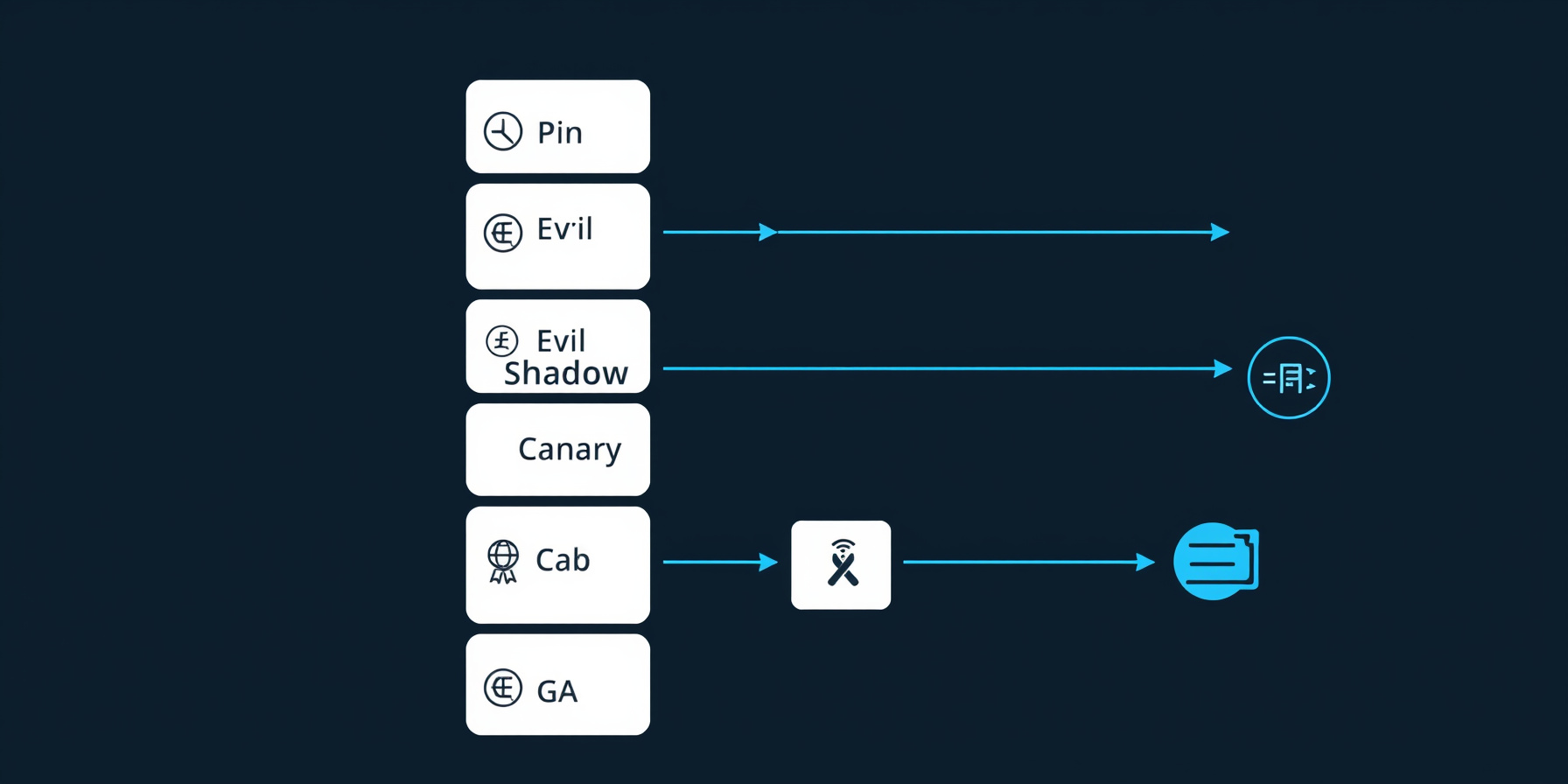
Model versioning is the load-bearing wall of production AI. When a vendor retires a model, your tuned prompts, cached prefixes, and structured output schemas can break overnight. The 2026 deprecation calendar is packed: OpenAI’s Evals platform and reusable prompt objects both shut down November 30, 2026, per OpenAI’s deprecations page, and gemini-2.0-flash was retired June 1, 2026. This playbook gives you the five-stage ladder—pin, eval, shadow, canary, GA—with rollback at every rung.
How This Was Researched
This analysis is based on official vendor documentation reviewed live in August 2026: OpenAI’s deprecations, evals, prompt caching, and structured outputs pages, Anthropic’s model deprecation lifecycle, Google’s Gemini model guides and deprecations, LangSmith’s evaluation and prompt management docs, and OpenRouter’s Models API. We did not perform hands-on testing or benchmark any vendor API; all claims trace to primary sources. We deliberately excluded fine-tuning pipelines and self-hosted serving (vLLM, TGI), which have different versioning mechanics. Last researched: August 2026.
How to Safely Roll Out LLM Model Upgrades in Production
A safe LLM upgrade is a five-stage ladder—pin, eval, shadow, canary, GA—where every stage has a rollback and a go/no-go gate before traffic moves. Because OpenAI grants at least six months for GA models and about two weeks for previews, you have time to climb the ladder if you start early, per OpenAI’s deprecation policy.
Rollback is a pointer flip in your router or gateway, not a redeploy: keep the old model snapshot deployed and switch traffic back atomically in under a minute. Each stage is gated—no shadow until offline evals pass, no canary until shadow metrics are clean, no GA until canary error rates match baseline.
Model IDs Are Deployment Contracts: Pin Snapshots, Not Aliases
Pin production traffic to a specific model snapshot ID, never a vendor alias like gpt-5.6 or gemini-3.6-flash-latest, because aliases are mutable contracts vendors can hot-swap without your consent. Google warns the latest alias can change with only two weeks’ notice and recommends production apps use a specific stable model, per the Gemini API models guide.
A pinned snapshot gives you a stable target for evals, cache keys, and rollback; an alias gives you a surprise upgrade at 2 a.m. When you upgrade, you change one string in config, and your evaluation suite runs against that exact ID before any traffic moves.
Vendor Deprecation Clocks Set Your Migration Cadence
Vendor deprecation clocks dictate your internal migration timeline, and knowing each notice period lets you schedule upgrades instead of reacting to outages. OpenAI gives at least six months for GA models, at least three for specialized models, and roughly two weeks for previews, all via email, per OpenAI’s deprecations page.
Anthropic runs a four-stage lifecycle—Active, Legacy, Deprecated, Retired—with at least 60 days’ notice and a usage-audit CSV export to find traffic still hitting retiring models, per Anthropic’s model deprecation docs. As of August 2026, Anthropic retired Sonnet 4 and Opus 4 on June 15 and Opus 4.1 on August 5; Google retired gemini-2.0-flash on June 1 with gemini-3.6-flash as replacement, per Gemini’s deprecation schedule. Build a calendar of these dates and start your ladder at least one notice period before each retirement.
Prompt Versioning as Code Versioning: Commits, Tags, Environments, Rollback
Treat prompts as code with full version control—commits, tags, environments, rollback history—because a prompt is a deployment artifact just like a service binary. LangSmith’s prompt management provides Staging and Production environments, reserved commit tags, ordered rollback history, CI/CD webhooks, and owners-only promotion, per LangSmith’s prompt management docs.
This means a prompt change flows through the same review-and-promote path as a pull request, and a regression reverts to the previous tagged commit in one action. The 2026 twist: OpenAI is deprecating its reusable prompt objects on November 30, 2026, so versioning moves entirely into your application code and git history, per OpenAI’s deprecations page.
Eval-Gated Promotion: The Offline Gate Before Any Traffic Moves
Before any traffic moves, run an offline evaluation suite that benchmarks the new model against your pinned baseline to catch quality, format, and safety regressions. LangSmith’s offline evaluation is designed for this—“benchmark versions, catch regressions” on a fixed dataset before deployment, per LangSmith’s evaluation docs.
Define your go/no-go gate as a threshold—the new model must match or beat baseline on task accuracy and format adherence—and do not promote past this stage on a failure. This gate is your cheapest error: a bad model caught here costs a few API calls, not a production incident. For the full architecture of building these harnesses, see our agent eval harness architecture.
Shadow and Online Evaluation: Scoring the New Model on Real Traces
Shadow mode runs the new model on real production traces in parallel with your pinned model—scoring both without serving new output to users—and online evaluation monitors the promoted model on live traffic. LangSmith’s online evaluation covers production-trace monitoring, anomaly detection, alerting, sampling-rate cost controls, and a user-signal feedback loop, per LangSmith’s evaluation docs.
In shadow, compare both models’ outputs on the same inputs for latency, token count, and quality; if the shadow model is slower or worse, stop before going live. This is where your LLM observability architecture earns its keep: you need trace-level visibility into both models side by side.
Canary Rollout and the Pointer-Flip Rollback
Canary rollout sends a small, controlled percentage of live traffic to the new model while keeping the old snapshot hot, and rollback is a pointer flip in your router that takes under a minute, not a redeploy. Your gateway or LLM router architecture holds a mapping from model alias to pinned snapshot ID; the canary stage changes that mapping for, say, 5% of requests.
Monitor error rates, latency percentiles, and eval scores against baseline—if anything degrades, flip the pointer back to the old snapshot for 100% of traffic instantly. Because the old model is still deployed and cached, rollback is immediate with no cold-start penalty.
The Hidden Tax: Cache Keys, Cold-Cache Spikes, and Rollout Economics
Model upgrades invalidate your prompt cache, causing a cold-cache spike in cost and latency you must budget for. OpenAI’s prompt caching uses exact-prefix matching: any change earlier in the prompt—including tools, schemas, and images—invalidates reuse, and on GPT-5.6 and later, cache writes are billed at 1.25× the input rate, per OpenAI’s prompt caching guide.
Monitor cached_tokens and cache_write_tokens during rollout: a new model version with a changed system prompt means your first requests pay full write cost. Plan the canary to absorb this spike on a small traffic slice, and see our prompt caching production patterns for mitigation tactics.
Contract Versioning: Structured Outputs and Multi-Vendor Tooling
Structured outputs and multi-vendor tooling need their own versioning contracts, because a model upgrade can silently change JSON Schema adherence or break vendor-specific features. OpenAI’s structured outputs let you define JSON Schema in code via Pydantic or Zod, making the schema a versioned artifact that travels with your codebase, per OpenAI’s structured outputs guide.
For multi-vendor setups, OpenRouter’s Models API exposes a machine-readable expiration_date and canonical_slug per model, enabling automated deprecation detection and multi-vendor A/B testing, per OpenRouter’s models guide. Add a contract test to your eval gate: assert the new model produces valid output against your schema before promotion.
2026 Field Notes: What Changed This Year
The 2026 changes cluster around three themes: tighter deprecation schedules, API surface removals, and behavioral changes in newer models. OpenAI deprecated its Evals platform (read-only October 31, shutdown November 30, 2026) and its reusable prompt objects (shutdown November 30, 2026), pushing versioning into app code, per OpenAI’s deprecations page.
Anthropic retired Sonnet 4, Opus 4, and Opus 4.1 across June and August 2026, and Opus 4.7 and later return a 400 error for temperature and top_p, breaking legacy code, per Anthropic’s model deprecation docs. Gemini retired 2.0-flash in June 2026, per Gemini’s deprecation schedule. The takeaway: check deprecation pages monthly, not quarterly.
FAQ
What is the difference between pinning a model snapshot and using an alias?
A pinned snapshot is an immutable model ID that never changes, giving you a stable target for evals, caching, and rollback. An alias like latest is mutable and can be hot-swapped with as little as two weeks’ notice, as Google documents for its latest alias, per the Gemini API models guide. Pin snapshots in production; use aliases only in development.
What is the rollback procedure if a canary fails?
Rollback is a pointer flip in your router: change the model mapping back to the old pinned snapshot ID for 100% of traffic, which takes under a minute and requires no redeploy. This works because you kept the old model deployed and warm throughout the canary. LangSmith’s ordered rollback history applies the same principle to prompts, per LangSmith’s prompt management docs.
How much notice do vendors give before retiring a model?
Notice varies by vendor and tier: OpenAI gives at least six months for GA models, three months for specialized models, and about two weeks for previews, per OpenAI’s deprecations page. Anthropic gives at least 60 days across its lifecycle, per Anthropic’s model deprecation docs. Google’s latest aliases can change with two weeks’ notice, per the Gemini API models guide.
Conclusion
LLM model versioning is not a DevOps nicety; it is the discipline that keeps production AI alive through the 2026 deprecation wave. Pin snapshots, not aliases. Gate every promotion with offline evals, then shadow, then canary. Keep rollback as a pointer flip, not a redeploy. Budget for cold-cache spikes and schema drift. The vendors have given you the calendar—so the only excuse for an unplanned outage is ignoring it. Start your ladder today.