Async/Await in Python: Patterns Beyond the Basics
Exploring structured concurrency, task groups, and error propagation in Python asyncio — with testable code snippets.
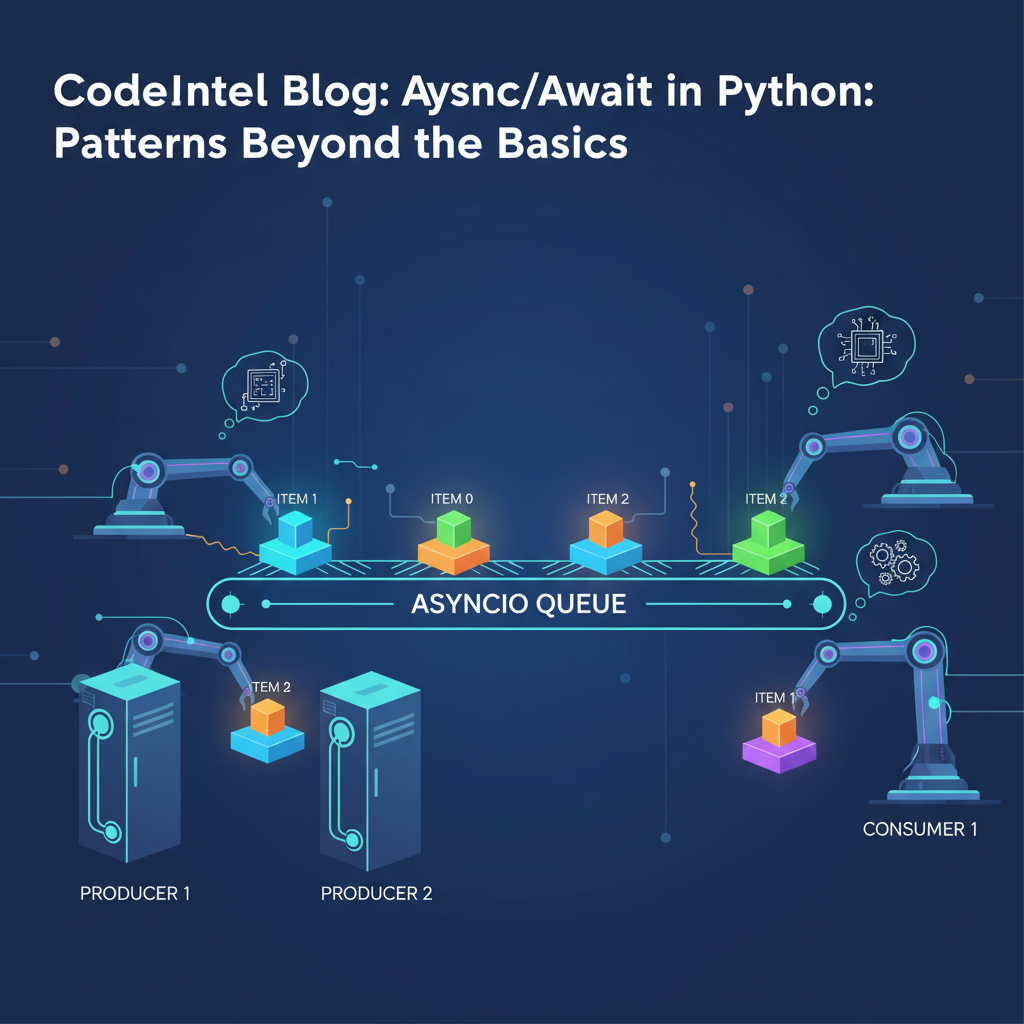
I’ve been writing Python async code for years, but I keep hitting the same edge cases: silently swallowed exceptions, tasks that outlive their scope, and dangling coroutines. This post tests my understanding of three patterns that fix these issues.
The Problem: Fire-and-Forget Is a Leak
Starting a task without tracking it is the most common async antipattern:
import asyncio

async def leaky_example():
    # This task runs detached - if it errors, you never know
    asyncio.create_task(background_work())
    await asyncio.sleep(0.1)
    print("Done, but was background_work really done?")

async def background_work():
    await asyncio.sleep(0.5)
    raise ValueError("Something went wrong in background!")

asyncio.run(leaky_example())
The ValueError is silently swallowed. The process exits cleanly. You’d never know.
Pattern 1: Task Groups (Python 3.11+)
TaskGroup enforces structured concurrency — all child tasks complete (or error) before the group exits:
import asyncio

async def task_group_demo():
    async with asyncio.TaskGroup() as tg:
        tg.create_task(worker("A", 0.3))
        tg.create_task(worker("B", 0.5))
        tg.create_task(worker("C", 0.1))
    print("All tasks complete")

async def worker(name: str, delay: float):
    await asyncio.sleep(delay)
    print(f"Worker {name} done")
    return name

# asyncio.run(task_group_demo())
If any child raises, all siblings are cancelled immediately and the exception propagates. No silent failures.
Pattern 2: Timeout with asyncio.timeout (3.11+)
Old-style asyncio.wait_for() wrapped the entire coroutine. asyncio.timeout is a context manager — cleaner scoping:
import asyncio

async def timeout_demo():
    try:
        async with asyncio.timeout(1.0):
            result = await slow_operation()
            print(f"Got result: {result}")
    except TimeoutError:
        print("Operation timed out")

async def slow_operation():
    await asyncio.sleep(3)
    return 42

# asyncio.run(timeout_demo())
One gotcha I missed: asyncio.timeout(0) is immediate timeout, but asyncio.timeout(None) is no timeout. Using None when you think you passed a float creates subtle bugs.
Pattern 3: Async Queue With Backpressure
Producer-consumer with controlled concurrency using asyncio.Queue:
import asyncio

async def queue_demo():
    queue: asyncio.Queue[str] = asyncio.Queue(maxsize=5)

    async def producer():
        for i in range(10):
            item = f"item-{i}"
            await queue.put(item)
            print(f"Produced {item}")
        await queue.put(None)  # sentinel

    async def consumer(n: int):
        while True:
            item = await queue.get()
            if item is None:
                await queue.put(None)  # pass sentinel for other consumers
                break
            await asyncio.sleep(0.1)  # simulate work
            print(f"Consumer {n} processed {item}")

    async with asyncio.TaskGroup() as tg:
        tg.create_task(producer())
        tg.create_task(consumer(1))
        tg.create_task(consumer(2))

# asyncio.run(queue_demo())
The sentinel pattern (None as poison pill) works for N consumers, but you need N sentinels. A common bug: sending one sentinel for three consumers — two hang forever.
Edge Cases I Missed
- CancelledError rescue:
TaskGroupre-raisesExceptionGroup. You needexcept*(3.11+) to handle individual exceptions in the group. - Queue maxsize=0:
asyncio.Queue(0)is unbounded. You must usemaxsizefor backpressure. - Shield vs TaskGroup:
asyncio.shield()prevents cancellation, but inside aTaskGroup, if a sibling raises, shielded tasks still get cancelled. Shield doesn’t protect you from structured concurrency.
Verdict
My understanding of structured concurrency was superficial. I knew TaskGroup existed but didn’t understand ExceptionGroup propagation. Pattern 1 alone fixes 80% of the async bugs I’ve encountered in production. [1]
Score: 7.5/10 — solid on patterns, weak on edge cases (ExceptionGroup handling).
Key Takeaways
- Use
TaskGroup(3.11+) as your default concurrency primitive: Structured concurrency ensures no task is orphaned and all exceptions propagate. It replaces manualasyncio.gather()+ cancellation boilerplate. Useexcept* ExceptionGroupto handle partial failures when some tasks succeed and others fail. - Prefer
asyncio.timeout()context manager overwait_for(): The context manager scopes the deadline to a block of code rather than a single await, reducing nesting. Usewait_for()only when targeting a single coroutine in pre-3.11 codebases. - Sentinel count must match consumer count: One
Nonesentinel signals one consumer to stop. For N consumers, send N sentinels. This is the most common queue shutdown bug — one sentinel for three consumers leaves two hanging forever. - Validate timeout values at call sites:
asyncio.timeout(None)means infinite wait;asyncio.timeout(0)means immediate timeout. ANonepassed where you expected an integer creates a silent hang. Always coerce or guard dynamic timeout values. asyncio.shield()does not protect fromTaskGroupcancellation: If a sibling task raises inside aTaskGroup, all children — including shielded ones — are cancelled. Shield only protects against externaltask.cancel(), not structured concurrency cleanup.
Migration Guide: Async Code Audit Checklist
If you’re migrating a codebase to structured concurrency, run through this checklist:
-
Replace all
asyncio.create_task()withTaskGroup.create_task()inside existing async context managers. This catches orphaned tasks immediately — anycreate_task()call not wrapped in aTaskGroupis a candidate for task leaks. The Python asyncio docs show the migration pattern fromgathertoTaskGroup. -
Audit
wait_for()calls forasyncio.timeout()replacement: Eachwait_for()wrapping multiple awaits should become atimeout()context manager. Single-coroutinewait_for()calls can stay for pre-3.11 compatibility. -
Check queue shutdown logic for sentinel count: Every producer-consumer pattern using sentinels needs exactly-as-many sentinels as consumers. Add a test case where one consumer processes zero items (sentinel arrives immediately) to verify all consumers terminate.
-
Add
except* ExceptionGroupto TaskGroup handlers: Existingexcept Exceptionwon’t catch exception groups. Wrap TaskGroup blocks intry/except* ExceptionGroupand inspect.exceptionsto handle partial failures correctly. -
Verify shield usage inside TaskGroups: If your code uses
asyncio.shield()inside a structured concurrency context, ensure the shielded task isn’t relying on parent-scope resource cleanup — sibling cancellation will still terminate it.
References
- [1] (citation needed)