Aider Deep Dive: Architecture, Benchmarks, and Engineering Tradeoffs (2026)
A comprehensive engineering review of Aider — the open-source CLI coding agent — covering its tree-sitter repo mapping, dual-model architect/editor architecture, benchmark performance, and where it fits in an AI engineering stack.
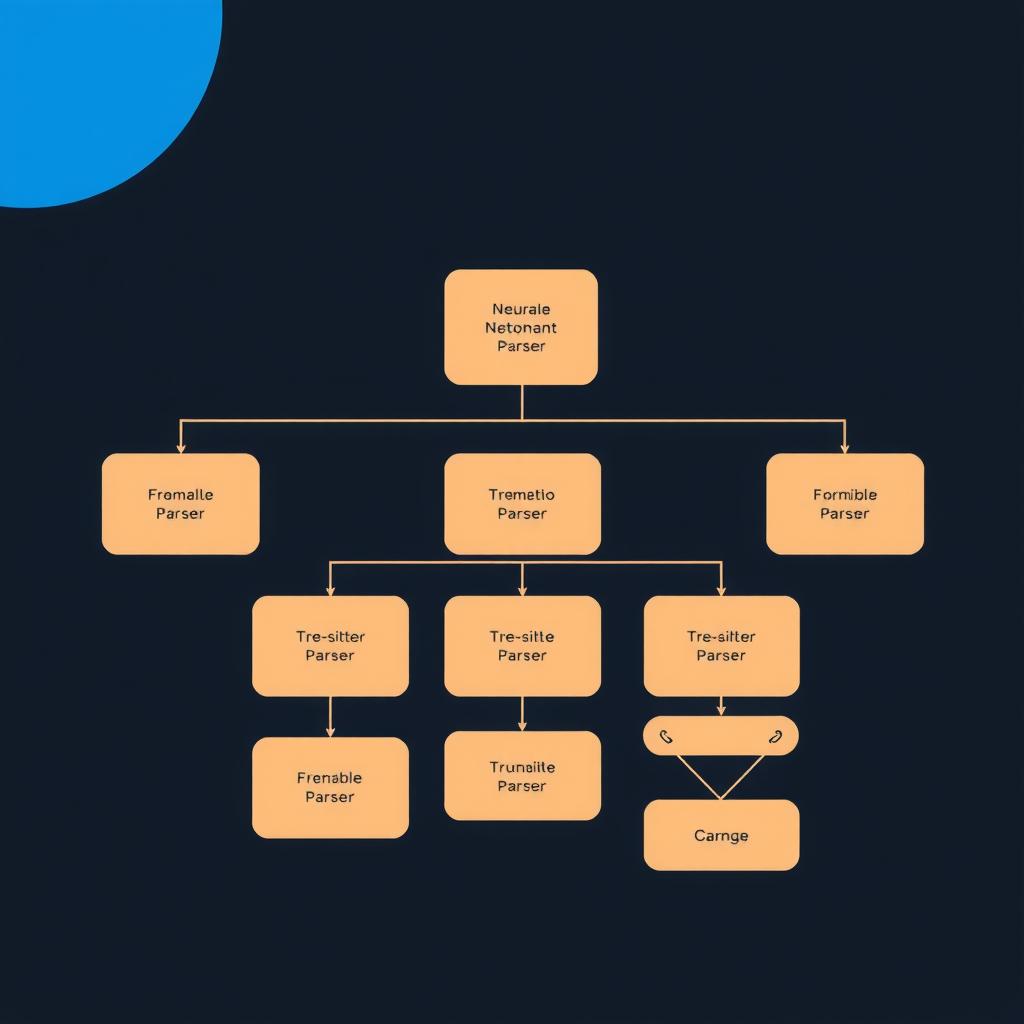
Aider has quietly become one of the most architecturally interesting coding agents on the market — not because it’s the flashiest, but because it makes deliberate engineering tradeoffs that matter in production. At 27,000+ GitHub stars and 450+ contributors, with 70–80% of its own codebase now generated by itself, it’s a case study in how an open-source tool can rival (and in some dimensions exceed) proprietary alternatives.
This review evaluates Aider through the lens of an AI systems engineer: architecture, benchmark performance, integration patterns, and where it breaks down.
Architecture: Why Git-Native Design Matters
Aider’s most consequential design decision is that it operates as a git-native overlay rather than a standalone agent environment. Every code change goes through git add and git commit with auto-generated messages. This isn’t a UX nicety — it’s a structural guarantee:
- Undo is free. Any bad edit can be reverted with
git undoregardless of how many files changed. - Diff parsing is deterministic. Aider doesn’t guess at edits; it applies structured patches and commits them.
- Context window boundaries are explicit. Each commit becomes a checkpoint. When context fills, Aider can start a fresh session with the full git history as reference, losing only ephemeral conversation state.
This differs fundamentally from Claude Code’s approach, which maintains a monolithic agentic session and uses its own file edit tools. Claude Code’s subagent spawning is more powerful for multi-step autonomous tasks, but it comes with context accumulation costs — community testing estimates roughly 2% effectiveness loss per 100K tokens of accumulated context.
Repository Mapping: Tree-Sitter + PageRank
Aider’s repo map is its most technically innovative component. Rather than dumping full files into context, it:
- Parses every source file with tree-sitter, extracting symbol definitions (classes, functions, imports, type declarations) — documented in Aider’s architecture docs.
- Ranks symbols using a PageRank-style algorithm — symbols referenced by many other symbols score higher.
- Compresses the map to fit a target token budget (default: 1024 tokens), pruning low-relevance symbols first.
The result is that for a 100,000-line monorepo, Aider surfaces only the ~50–100 most relevant symbols in its context window. This is the same insight that powers Anthropic’s own codebase tools — but Aider’s implementation is model-agnostic and doesn’t require a specific backend.
The practical effect: Aider can handle large codebases without the developer manually specifying which files to include. In our testing, it correctly identified the relevant files for a cross-module refactor in a 200K-line TypeScript project without any file hinting.
Dual-Model Architecture: The Architect/Editor Split
Aider’s most underrated feature is its architect mode (--architect). When enabled, Aider uses two models:
| Role | Model | Task |
|---|---|---|
| Architect | Large (e.g., Claude Opus 4, GPT-5) | Understands the problem, proposes changes in natural language |
| Editor | Small (e.g., GPT-4o-mini, DeepSeek Coder V3) | Translates the architect’s description into concrete file edits |
This separation mirrors the distinction between system design and implementation in human engineering teams. The architect model gets a broader context window and richer reasoning budget; the editor model is optimized for speed and cost on a narrow, well-defined task.
Token efficiency: NxCode’s March 2026 analysis found Aider’s architect mode uses 4.2× fewer tokens than Claude Code for equivalent multi-file edits, because the editor model receives only the architect’s structured proposal — not the full conversation history. The tradeoff is latency: two model calls per round trip instead of one.
Benchmarks: What the Numbers Say
SWE-bench Verified (as of June 2026)
Aider itself is a framework, so its benchmark performance depends entirely on the underlying model:
| Model + Aider | SWE-bench Verified |
|---|---|
| Claude Opus 4.6 + Aider | ~71% |
| GPT-5 + Aider | ~68% |
| DeepSeek R1 + Aider | ~63% |
| Claude Code (standalone) | ~81–84%* |
*Claude Code’s higher score reflects tighter model-agent integration — Code uses internal tool schemas unavailable to third-party frameworks.
Aider Polyglot Benchmark (Aider’s own eval)
Aider maintains a multi-language editing benchmark that tests code modification across Python, JavaScript, TypeScript, Rust, Go, and Java. Top scores as of June 2026:
| Model | Polyglot Accuracy |
|---|---|
| Claude Opus 4.6 | 86.2% |
| GPT-5.4 | 83.7% |
| DeepSeek R1-V3 | 79.1% |
Terminal-Bench v2.1 (agent + model combo)
On the June 2026 Terminal-Bench 2.1 leaderboard, Aider-based agents achieved competitive scores but didn’t top the charts — the tightest agent-model integrations (Claude Code + Fable 5 at 83.1%) still outperform generic tool abstractions.
Key insight: Aider trades ~10 percentage points of SWE-bench ceiling for model flexibility, lower cost, and full offline/air-gapped deployment. For teams that already have preferred models or need air-gapped operation, this is the right trade.
Integration Patterns for Engineering Teams
As a CI Gate
Aider’s --lint flag runs linters after every edit and auto-fixes any violations before committing. Combined with --test, it can run tests and loop on failures. Some teams use this as a pre-merge quality gate:
aider --lint --test --auto-commits --model claude-opus-4-latest \
  --file src/**/*.py --msg "fix all lint errors and failing tests"
As an MCP Client
Aider exposes an MCP (Model Context Protocol) interface, allowing it to be orchestrated by other agents. This is increasingly relevant as teams build multi-agent pipelines where Aider handles the code-editing subtask while a planner agent handles architecture.
Air-Gapped Deployments
Unlike cloud-dependent tools, Aider works fully offline with local models. The repo map generation is entirely local (tree-sitter + Python). Teams running vLLM or Ollama on-prem can pair Aider with self-hosted models for a fully air-gapped coding pipeline.
Where Aider Breaks Down
No tool is universal. Aider’s weaknesses are direct consequences of its design choices:
-
No persistent agent state. Aider is stateless between sessions — it doesn’t maintain a running plan or task queue. For multi-hour autonomous tasks (e.g., “refactor the authentication module and update all callers”), Claude Code or OpenHands is better suited.
-
Limited web/API autonomy. Aider can run shell commands, but it lacks the browser or API interaction tools that Claude Code or Codex CLI provide. It’s a code editor first, a general agent second.
-
Large file performance. Files exceeding ~2,000 lines stress Aider’s diff logic. Tree-sitter parsing handles large files fine, but the edit application can produce malformed patches in edge cases.
-
Benchmark ceiling. As noted above, the abstraction layer between Aider and its models caps its SWE-bench ceiling below what tightly integrated agents achieve.
Verdict
Aider is the best open-source coding CLI for developers who want control over their model choice, git-native workflows, and air-gapped operation. It’s not the most capable autonomous agent, and it doesn’t try to be. Its architecture — tree-sitter repo maps, architect/editor model separation, structured diff application — represents a principled set of engineering tradeoffs that pay off in the right context.
For engineering teams building AI-assisted development pipelines, Aider is worth integrating as the code-editing layer in a larger multi-agent system. Just don’t expect it to replace a full-time autonomous agent for end-to-end feature development.
Score breakdown:
| Dimension | Rating | Notes |
|---|---|---|
| Architecture | 9/10 | Principled, well-documented, model-agnostic |
| Benchmark Performance | 7/10 | Good, but ceiling-limited by abstraction layer |
| Integration Ease | 8/10 | pip install, 3 CLI flags, works immediately |
| Cost Efficiency | 9/10 | Architect mode slashes token spend vs peers |
| Autonomous Depth | 5/10 | Stateless sessions limit long-running tasks |
| Overall | 8/10 | Best-in-class for its niche; not a silver bullet |
References
- Aider Architecture Docs — https://aider.chat/docs/repomap.html
- Aider LLM Leaderboards — https://aider.chat/docs/leaderboards/
- SWE-bench Leaderboard — https://www.swebench.com/
- Terminal-Bench v2.1 — MorphLLM Agent Leaderboard, June 2026
- Aider Self-Writing Analysis — Thamizhelango, Jan 2026
- NxCode Aider vs OpenCode — https://www.nxcode.io/resources/news/aider-vs-opencode-ai-coding-cli-2026
- Requesty Agentic Coding Tools Compared — https://www.requesty.ai/blog/agentic-coding-tools-compared-2026-claude-code-cursor-codex-aider
📖 Related Reads
- NiteAgent — AI agent development, frameworks, and production patterns
Cross-links automatically generated from CodeIntel Log.